Context
Digital goods change hands every day. Trust doesn't.
In Nigeria, a lot of digital trade happens in WhatsApp groups, Telegram channels and Instagram DMs. A seller posts an aged Instagram account, a batch of Amazon gift cards or a USDT rate. A buyer messages, sends money by bank transfer, and waits. If the seller disappears, there's nobody to call.
Creators face a quieter version of the same problem. An event organiser sells tickets through one link, a course through another, and an eBook through a third, then chases payment confirmations in their bank app.
Every sale needed one side to go first. Acctbazaar's job was to make sure neither side had to.
Acctbazaar puts both kinds of seller on one marketplace with escrow in the middle. Buyers pay into Acctbazaar, sellers deliver against a timer, and money is released only when the order is confirmed or the timer runs out. My job was to design the two seller experiences, merchant and creator, so that listing, delivering and getting paid felt safe and predictable.
The design
From sign-up to first payout
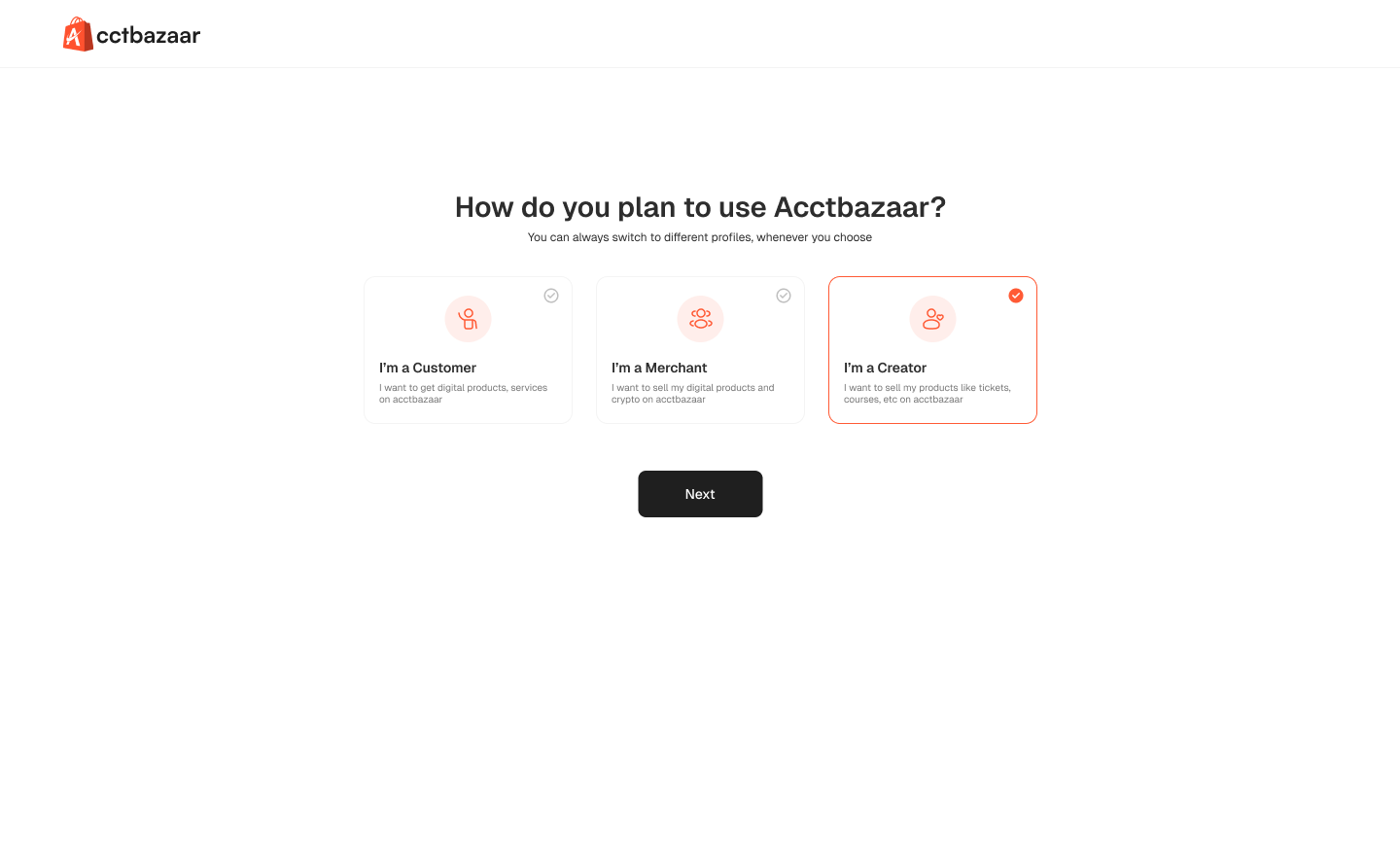
Merchants and creators share one account, one wallet and one way of handling orders. What they sell, and how they list it, is different. The design follows both from sign-up to their first payout.
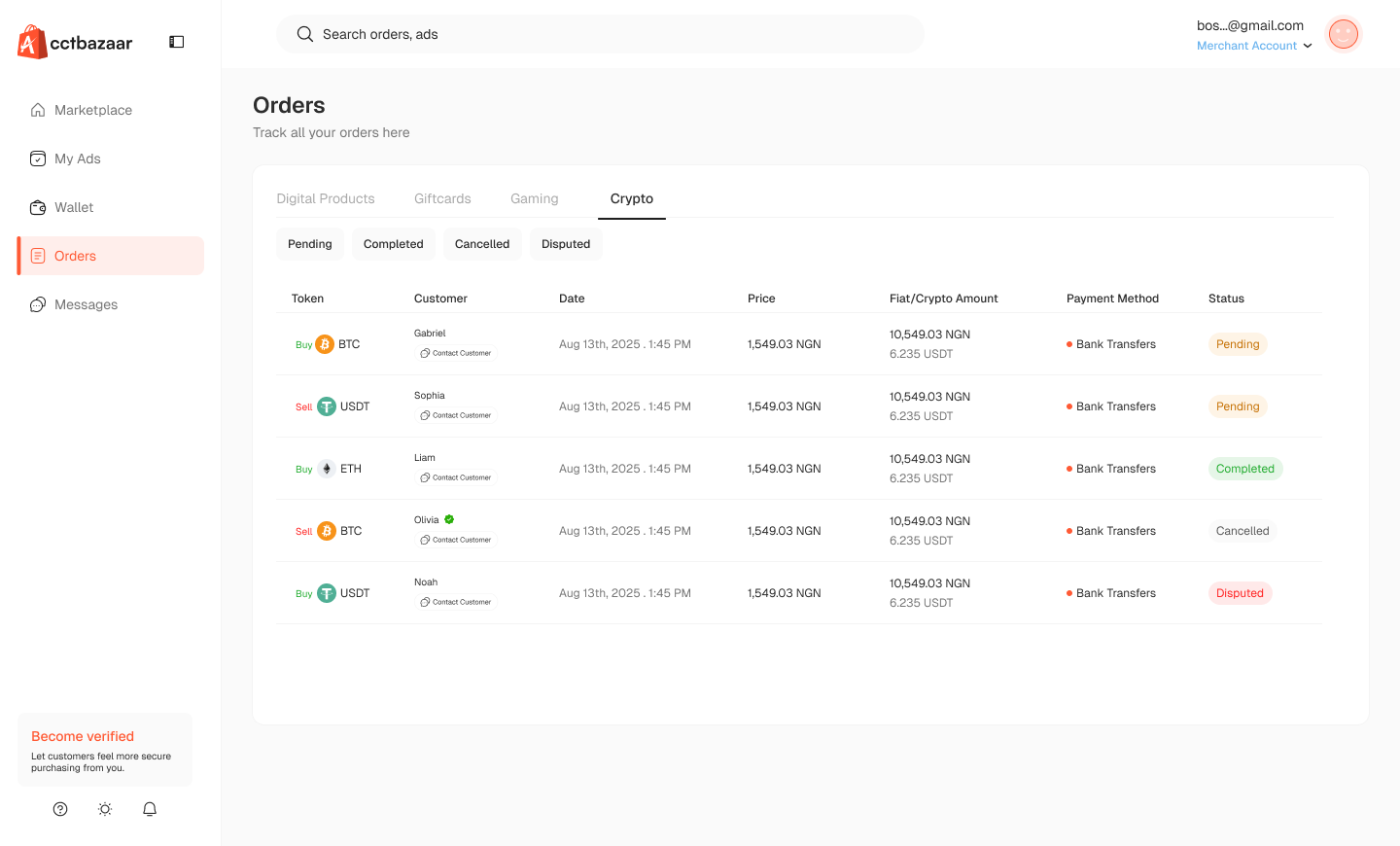
MerchantAccounts · Gift cards · Gaming · Crypto
Merchant onboarding
Sell the platform before asking for a fee
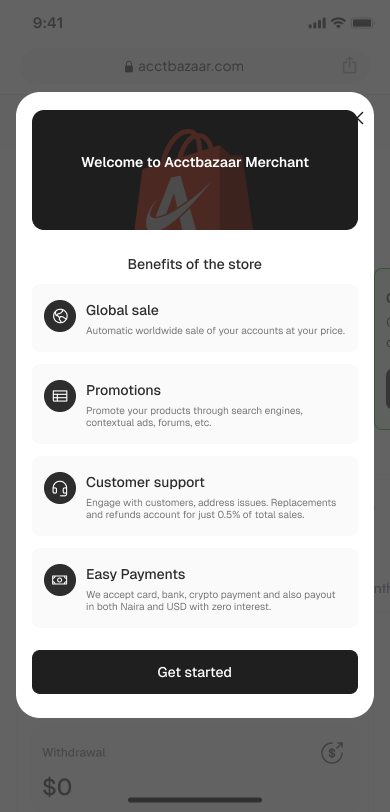
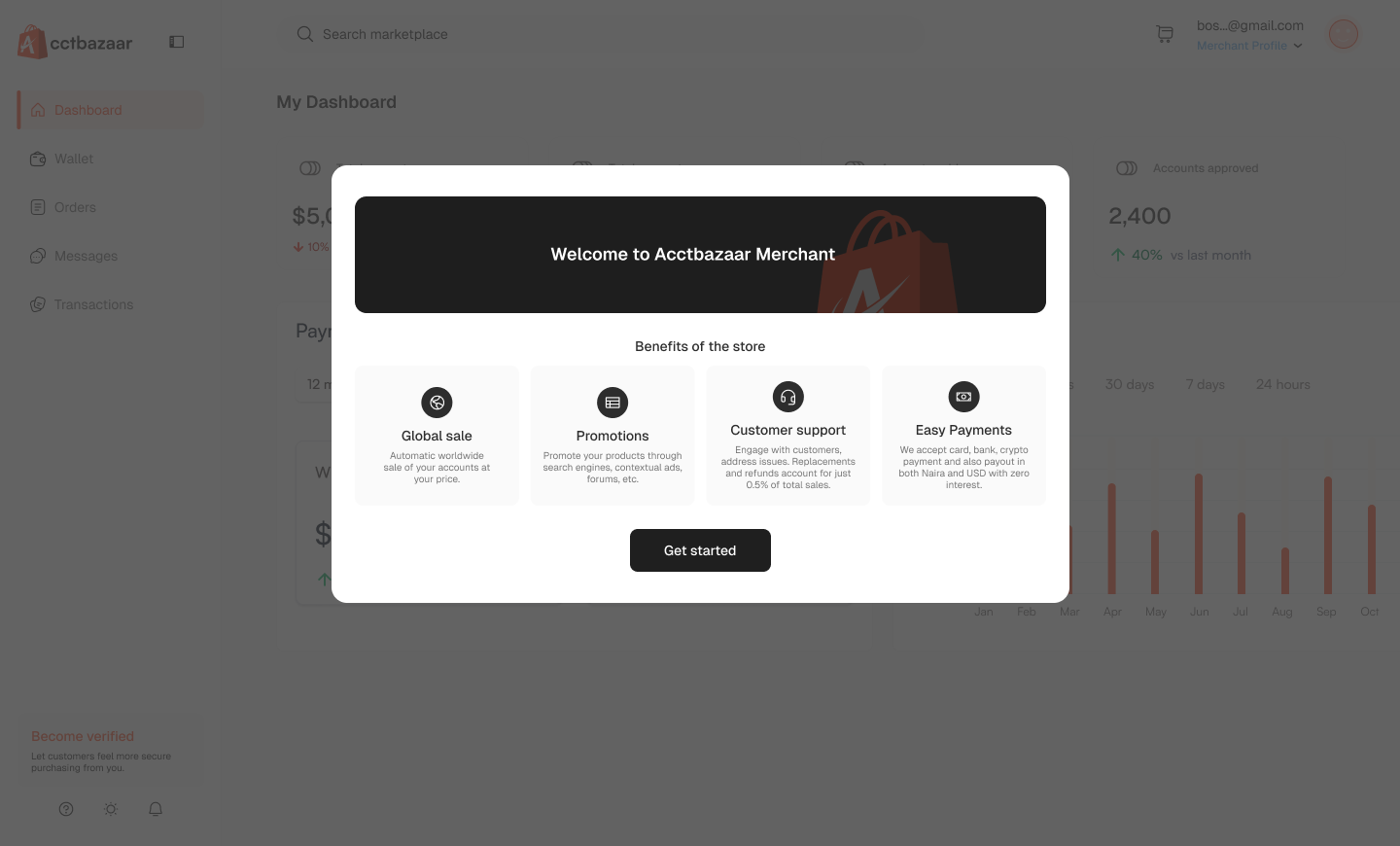
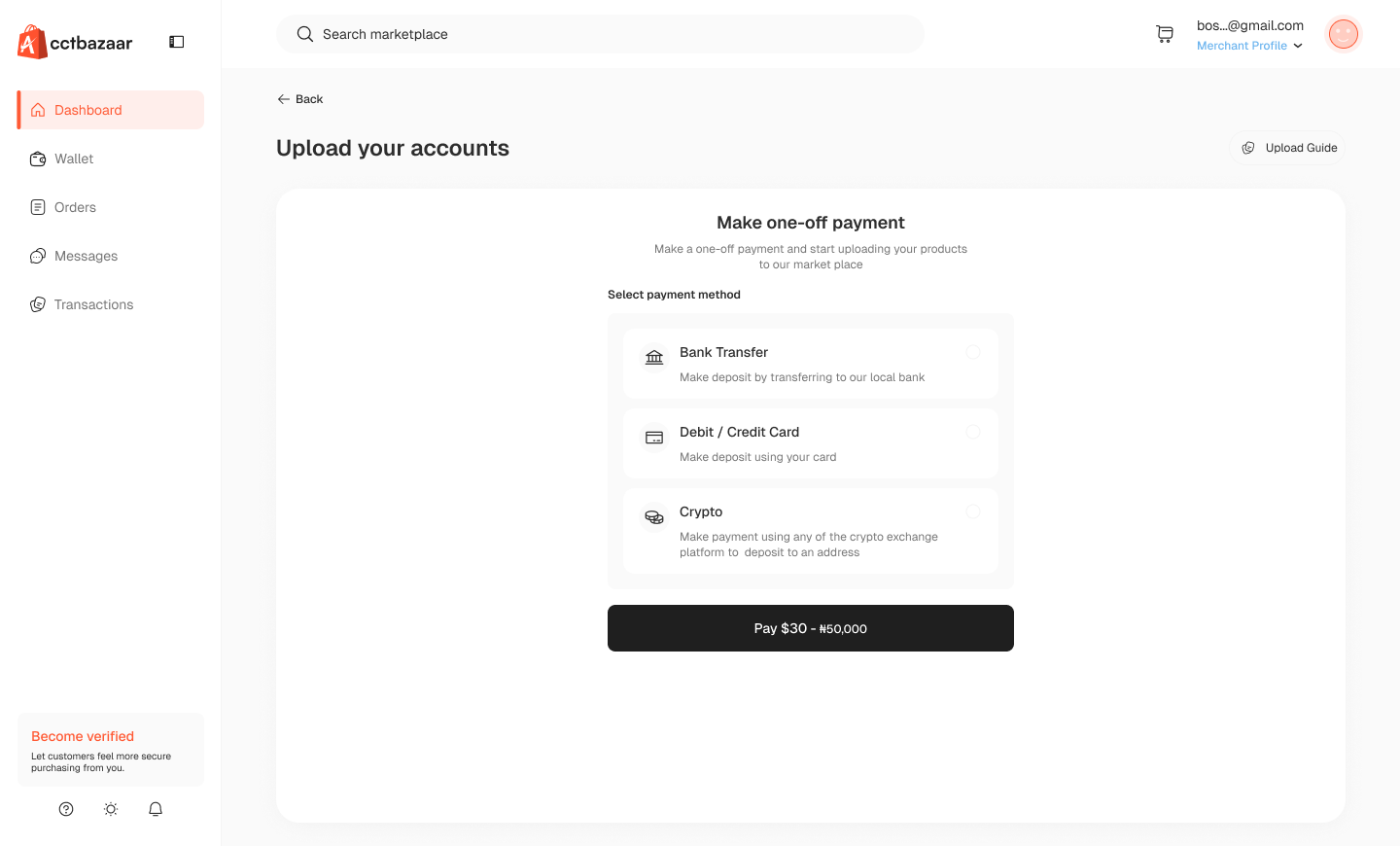
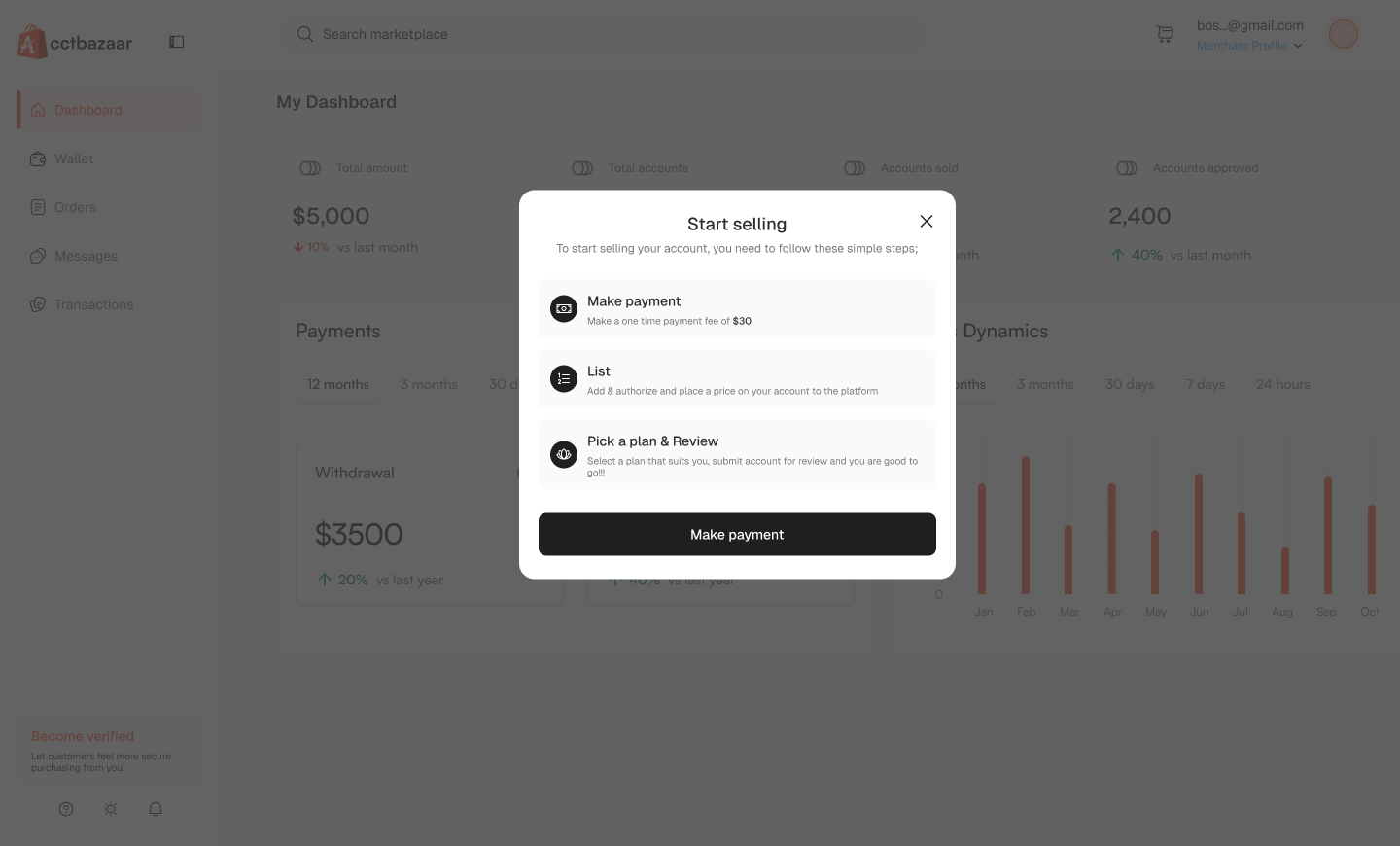
New merchants first see why to sell here: global reach, promotion, support that keeps refunds to 0.5% of sales, and payouts in naira or USD. Then three steps: a one-time $30 fee (₦50,000), a listing, and a plan. The fee is a deliberate filter that keeps spam sellers out, so it's stated plainly and accepted by bank transfer, card or crypto.
Listing
Delivery promises set at the point of listing
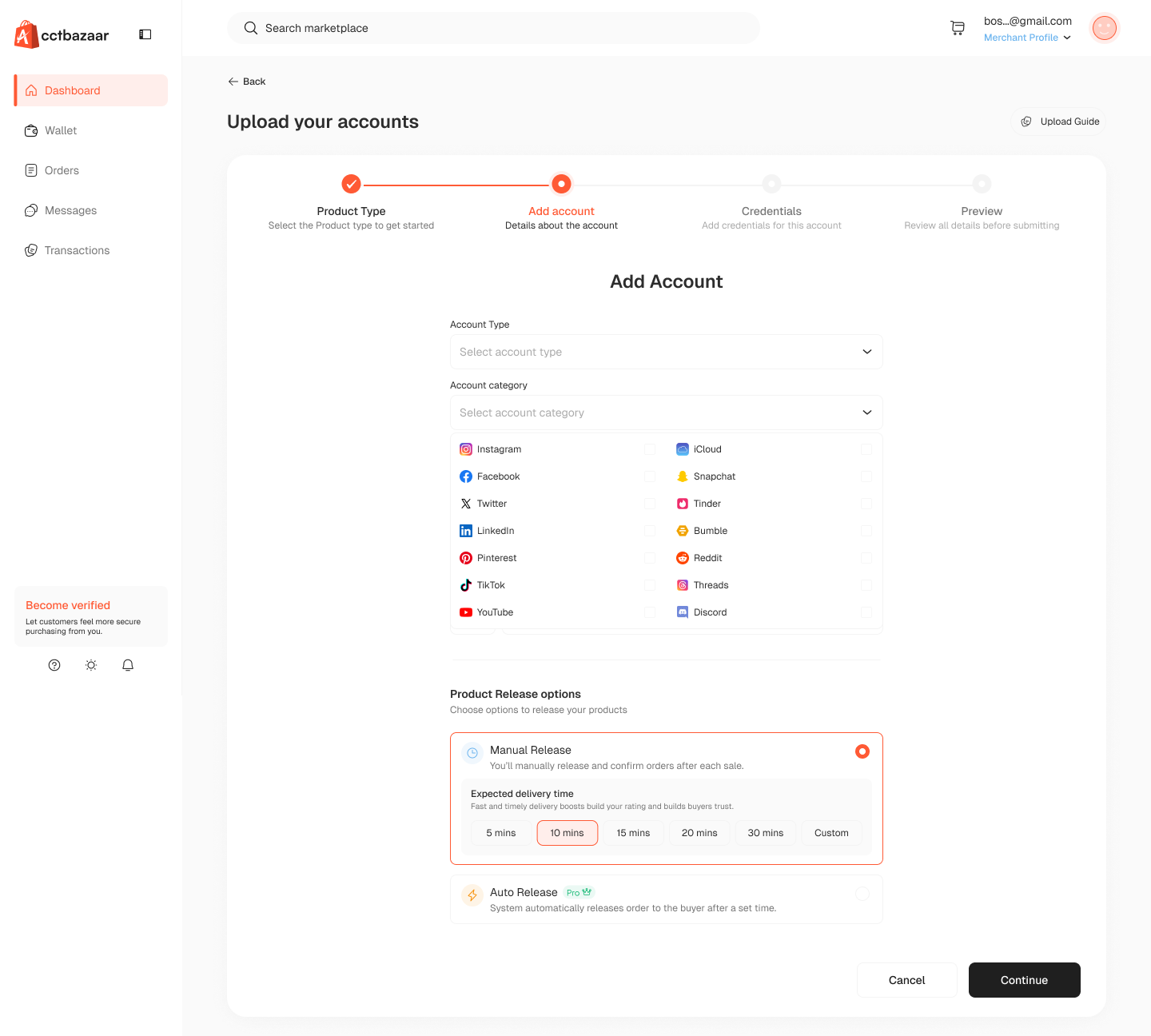
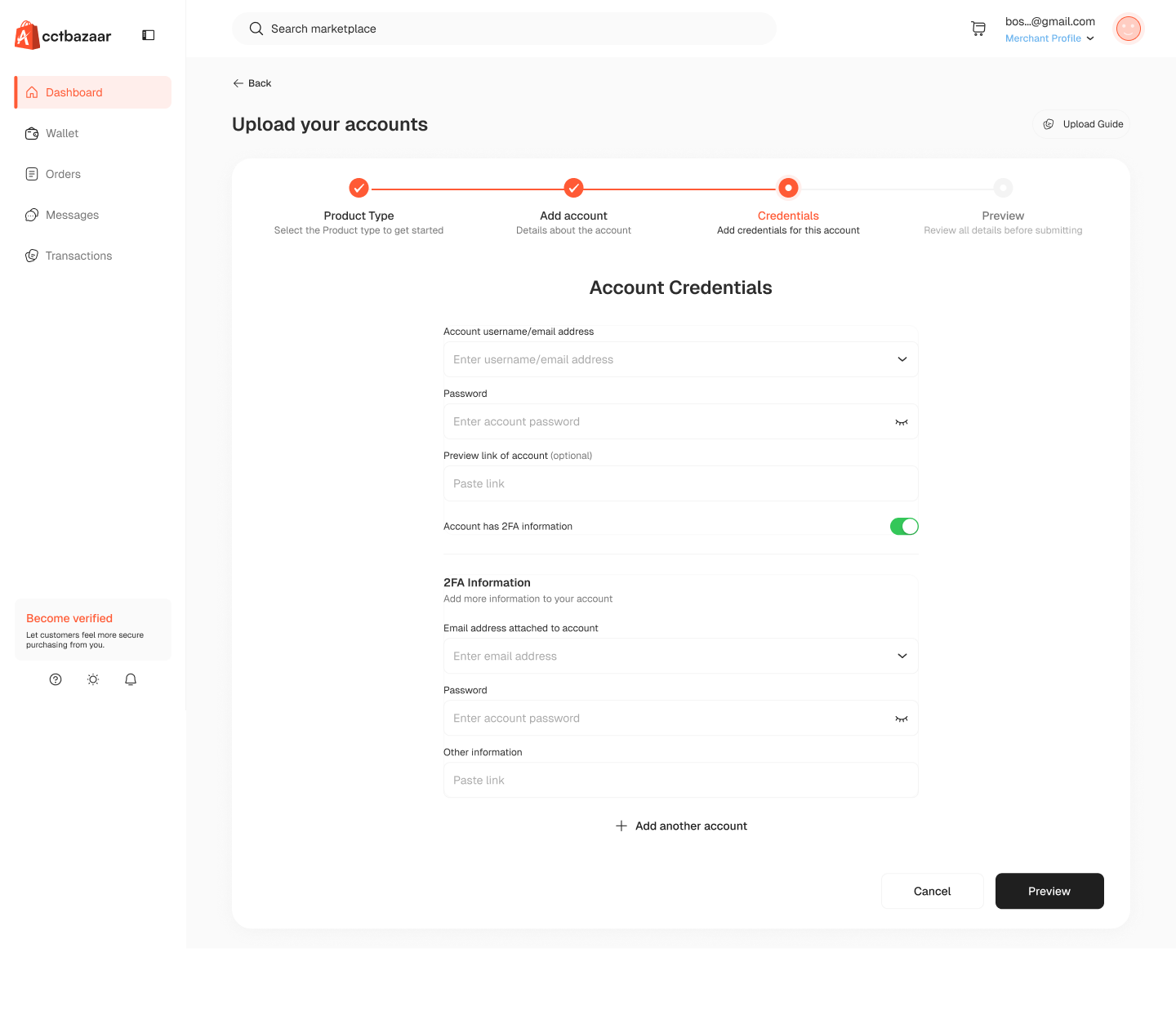
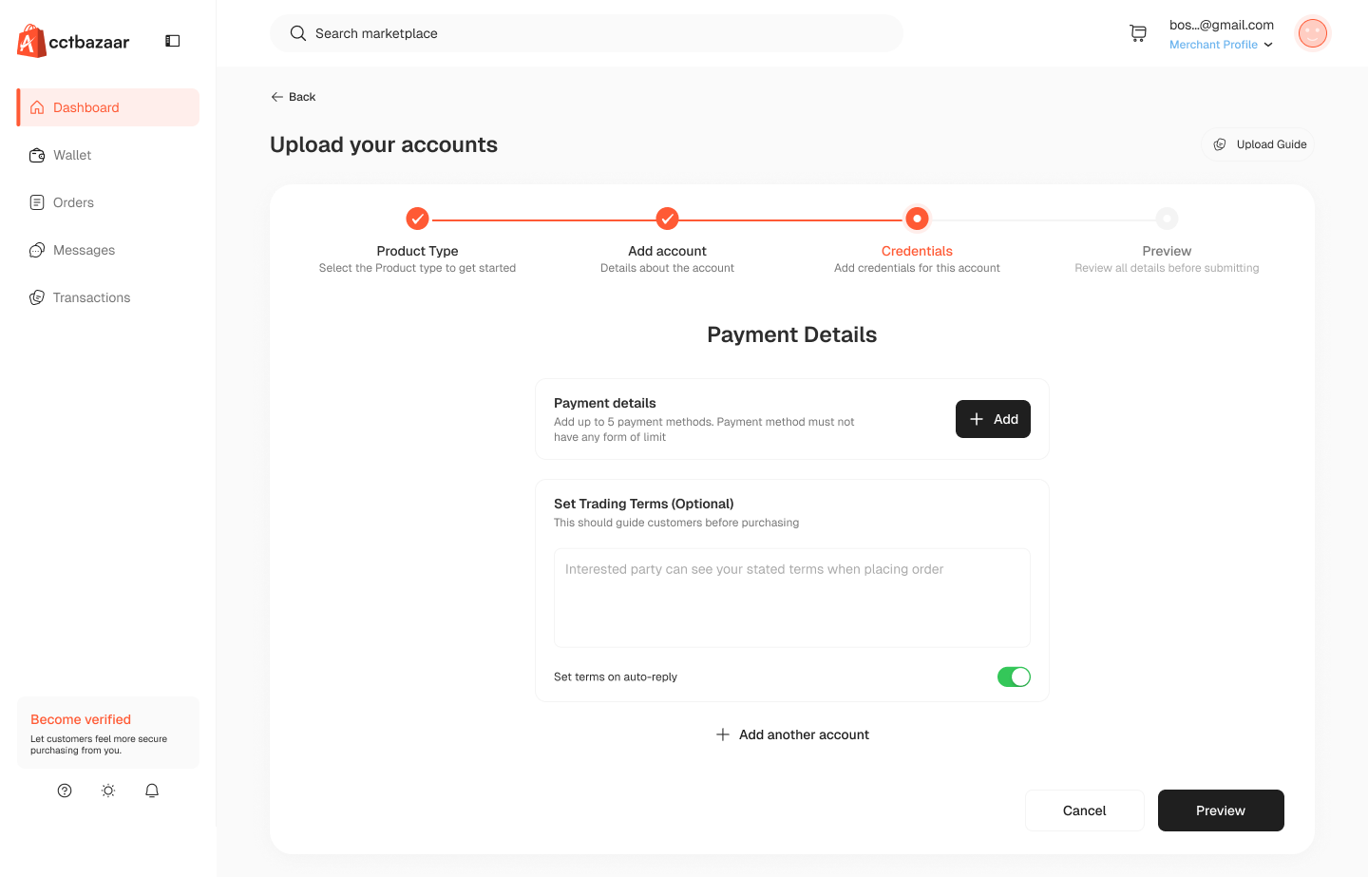
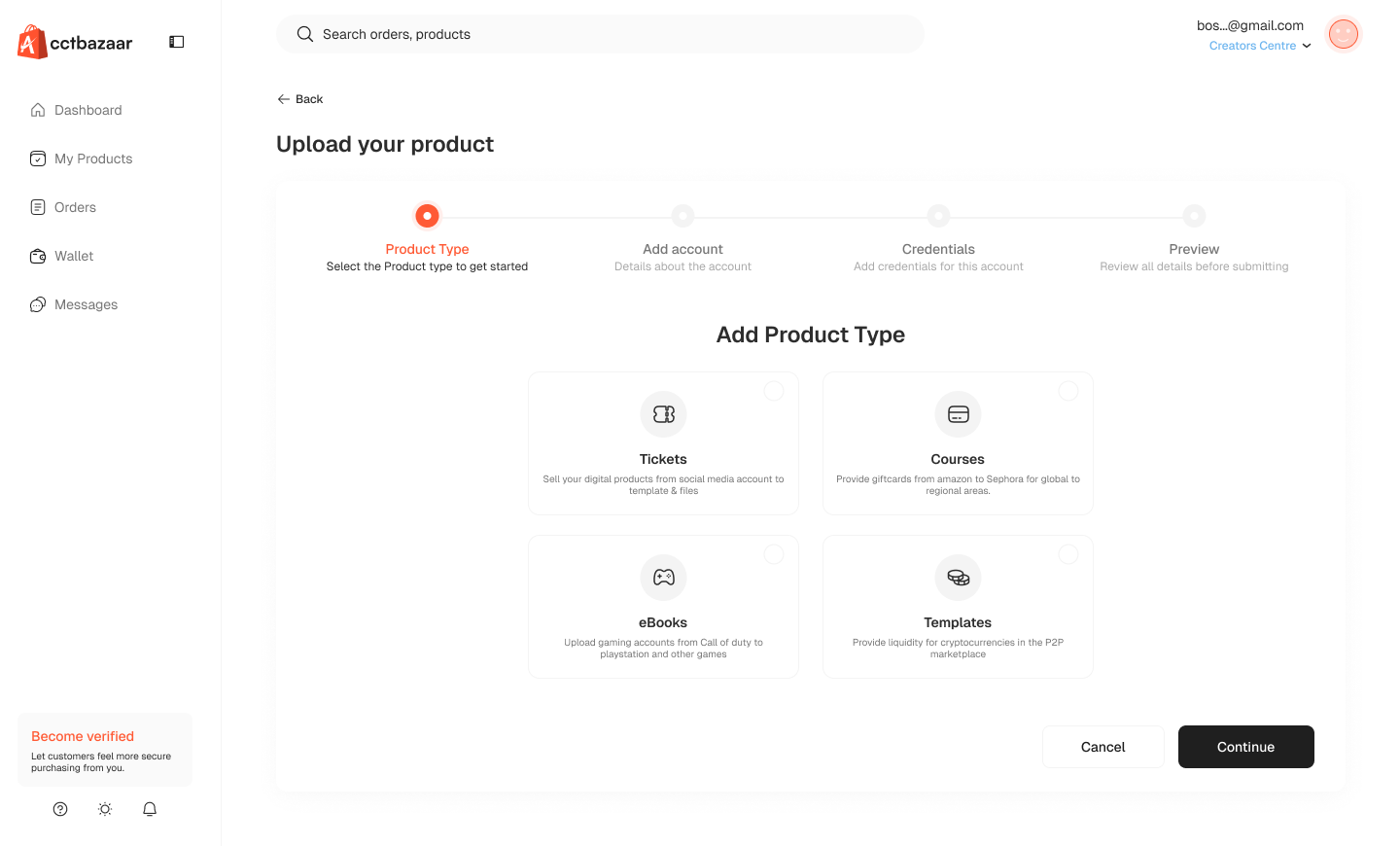
Every listing follows four steps: product type, details, credentials and preview. Merchants choose manual release, confirming each order themselves, or auto release, where the system hands over the product after a set time. They also commit to a delivery time, from 5 minutes up, which buyers see as "Delivers in 5 mins" on every order.
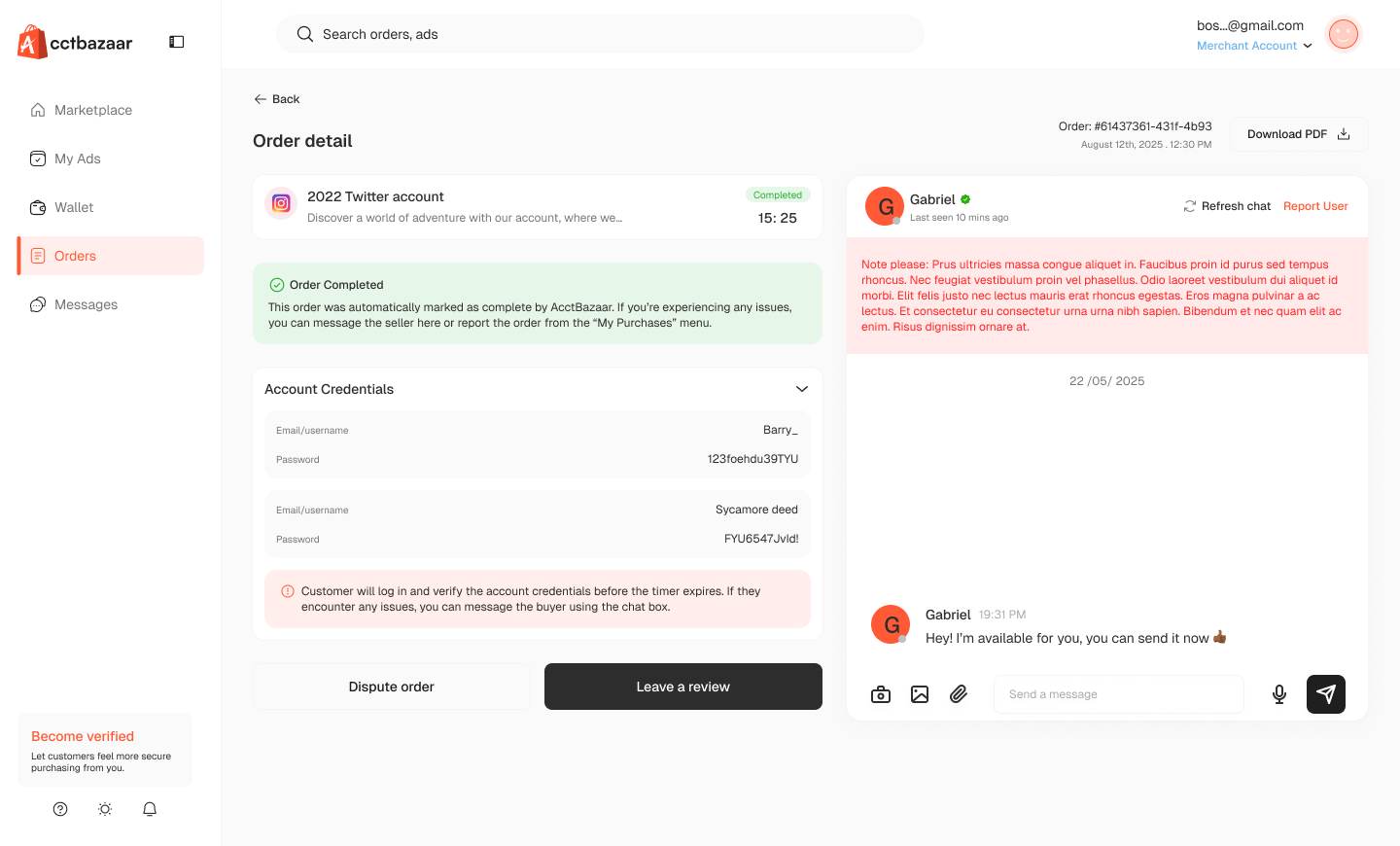
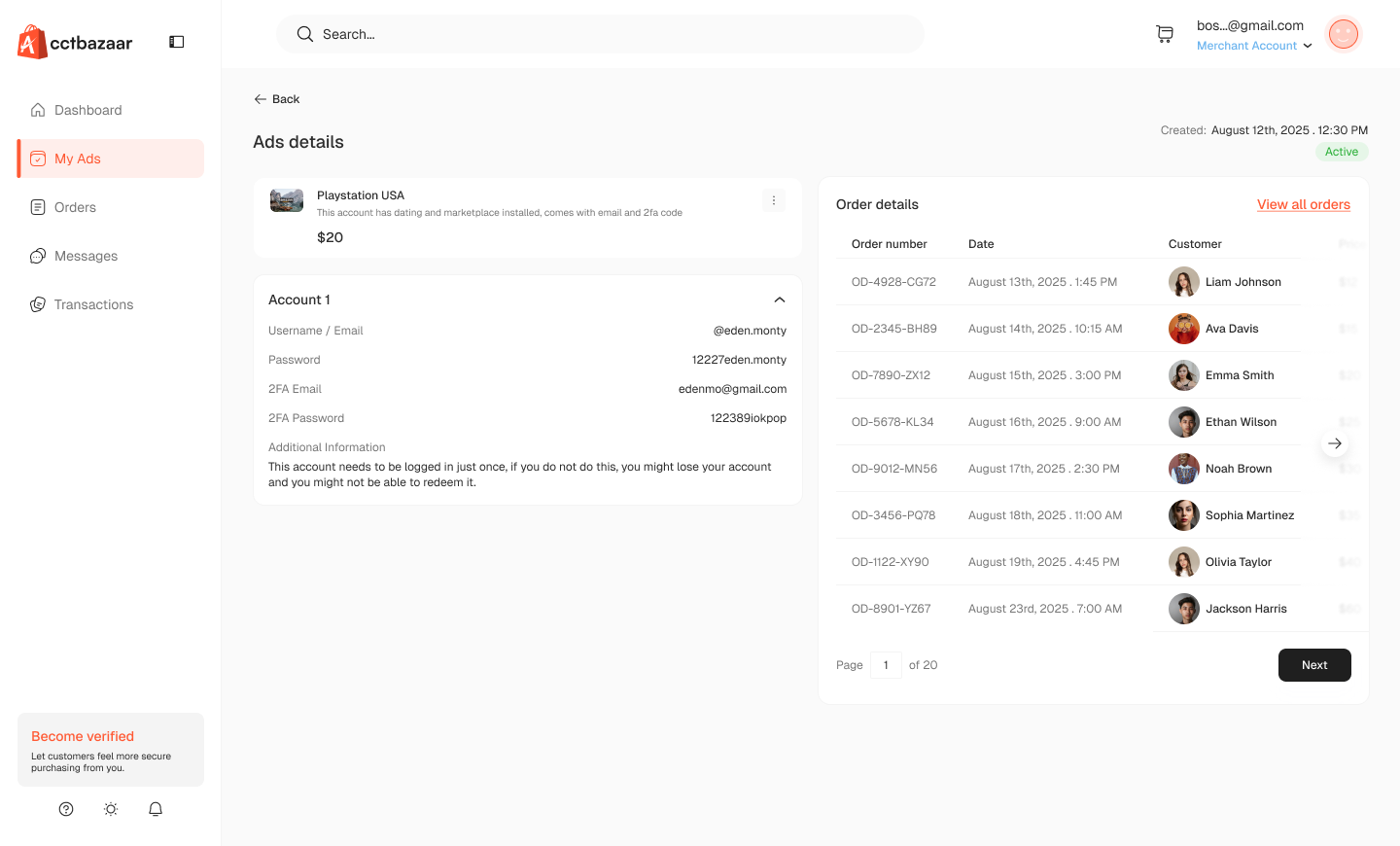
Credentials go into structured fields, including the 2FA email and password, so they're stored on the order rather than pasted into chat.
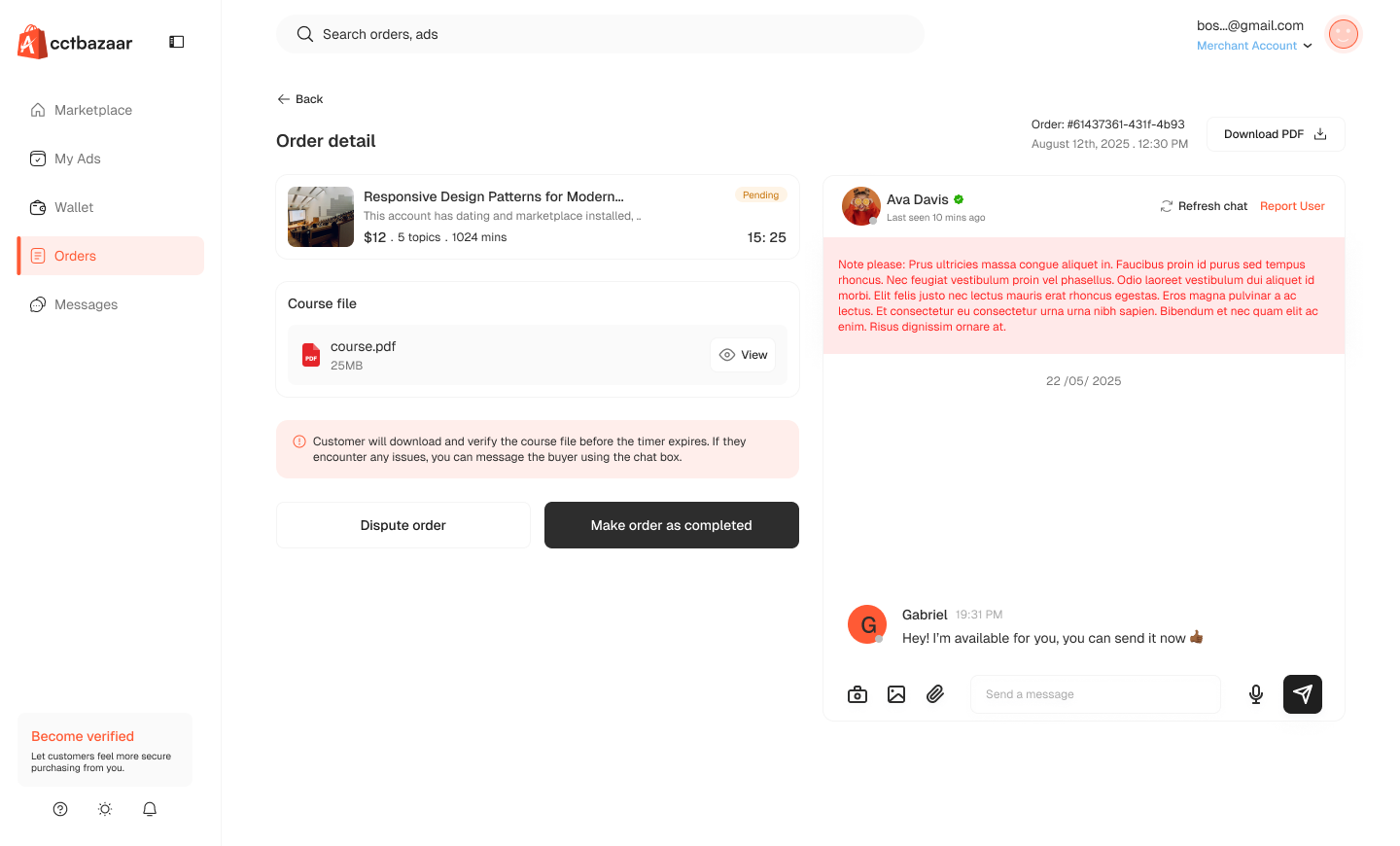
Every order shows a countdown, the delivered credentials and the chat with the buyer side by side. The buyer checks the product before the timer ends. If something is wrong, they open a dispute from the same screen. If not, the order completes, money moves out of escrow, and both sides leave a rating.
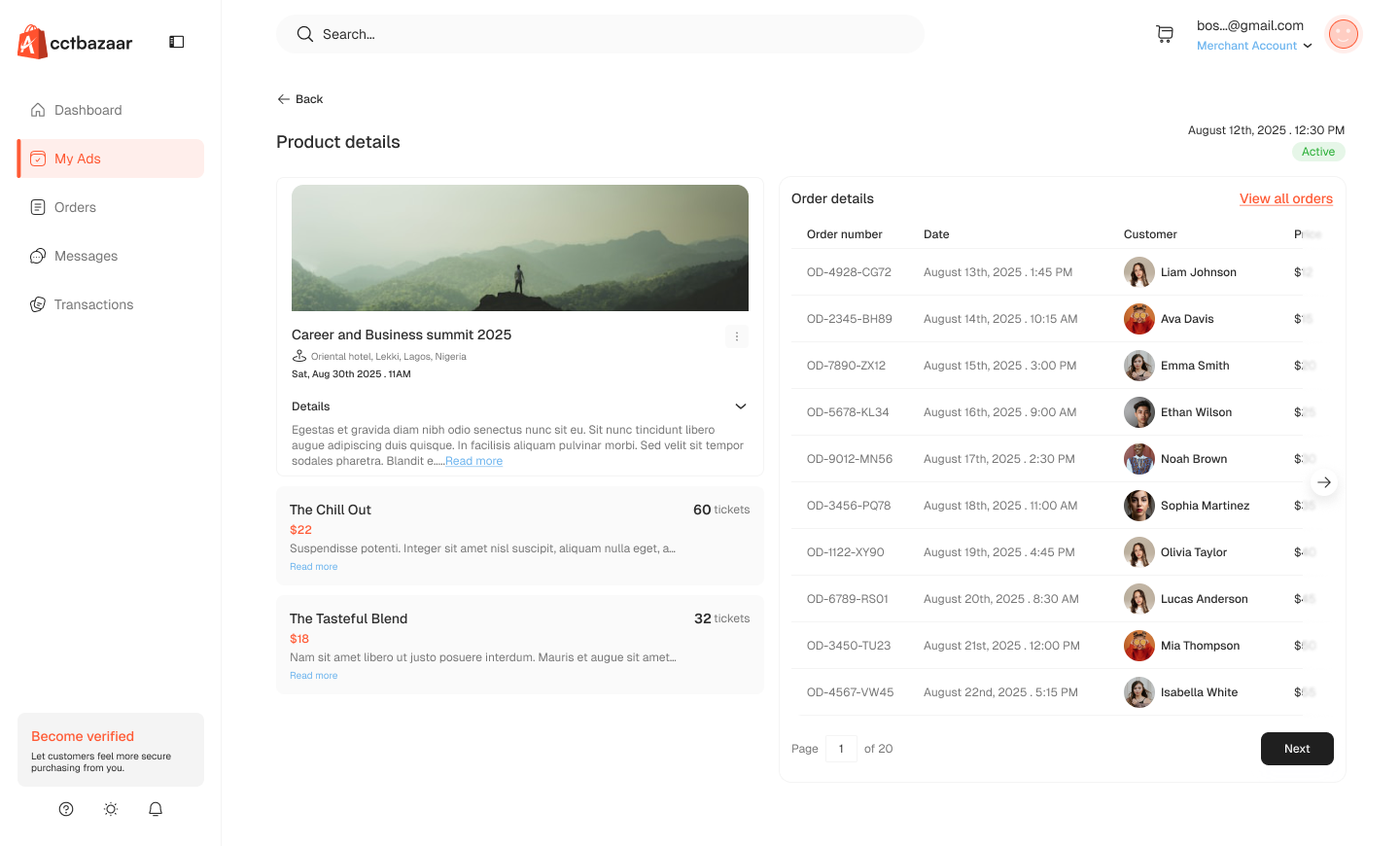
Each ad keeps its own order history, so a merchant can see exactly who bought what, and when.
CreatorTickets · Courses · eBooks · Templates
Creator's Centre
A storefront for the things creators make
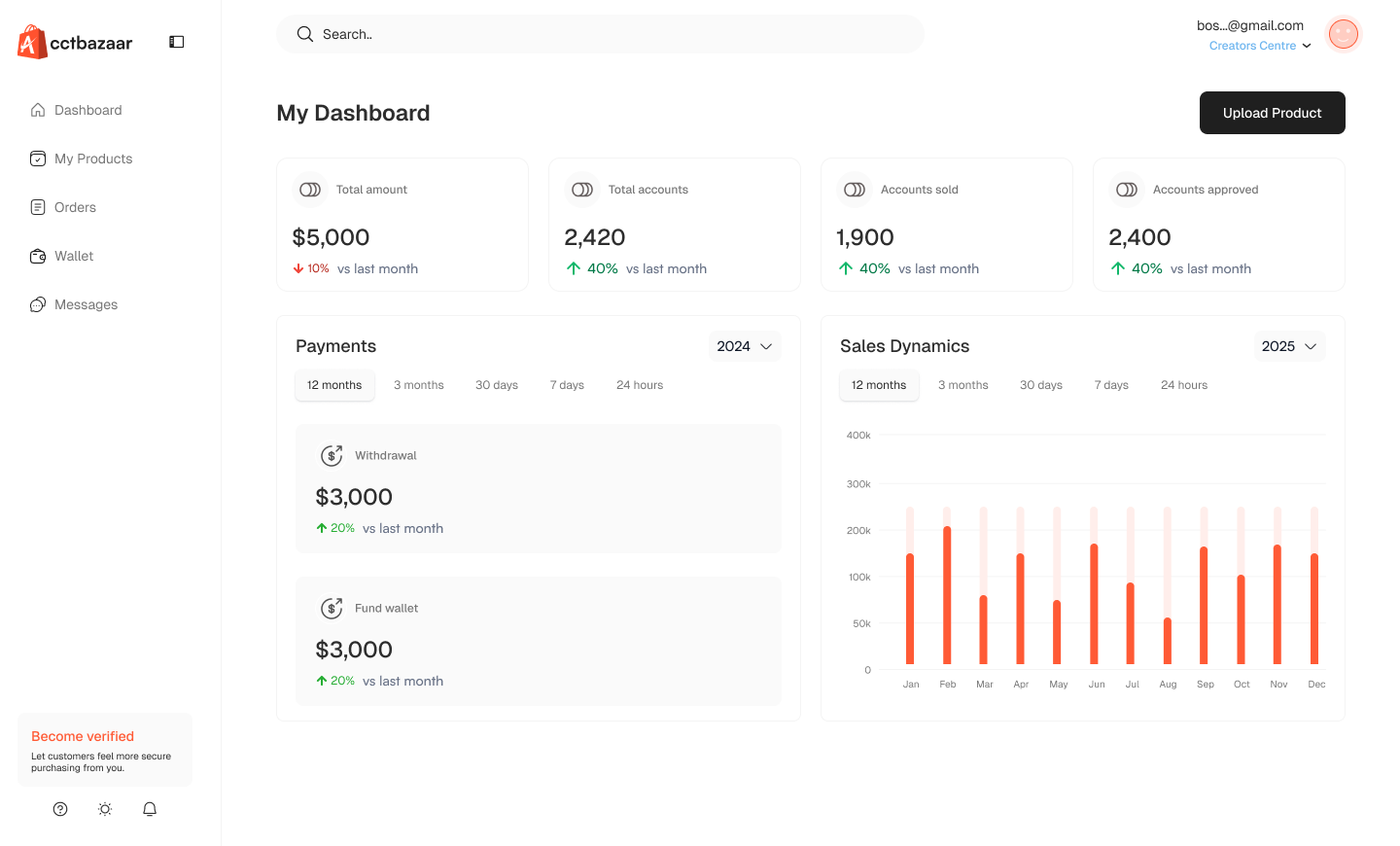
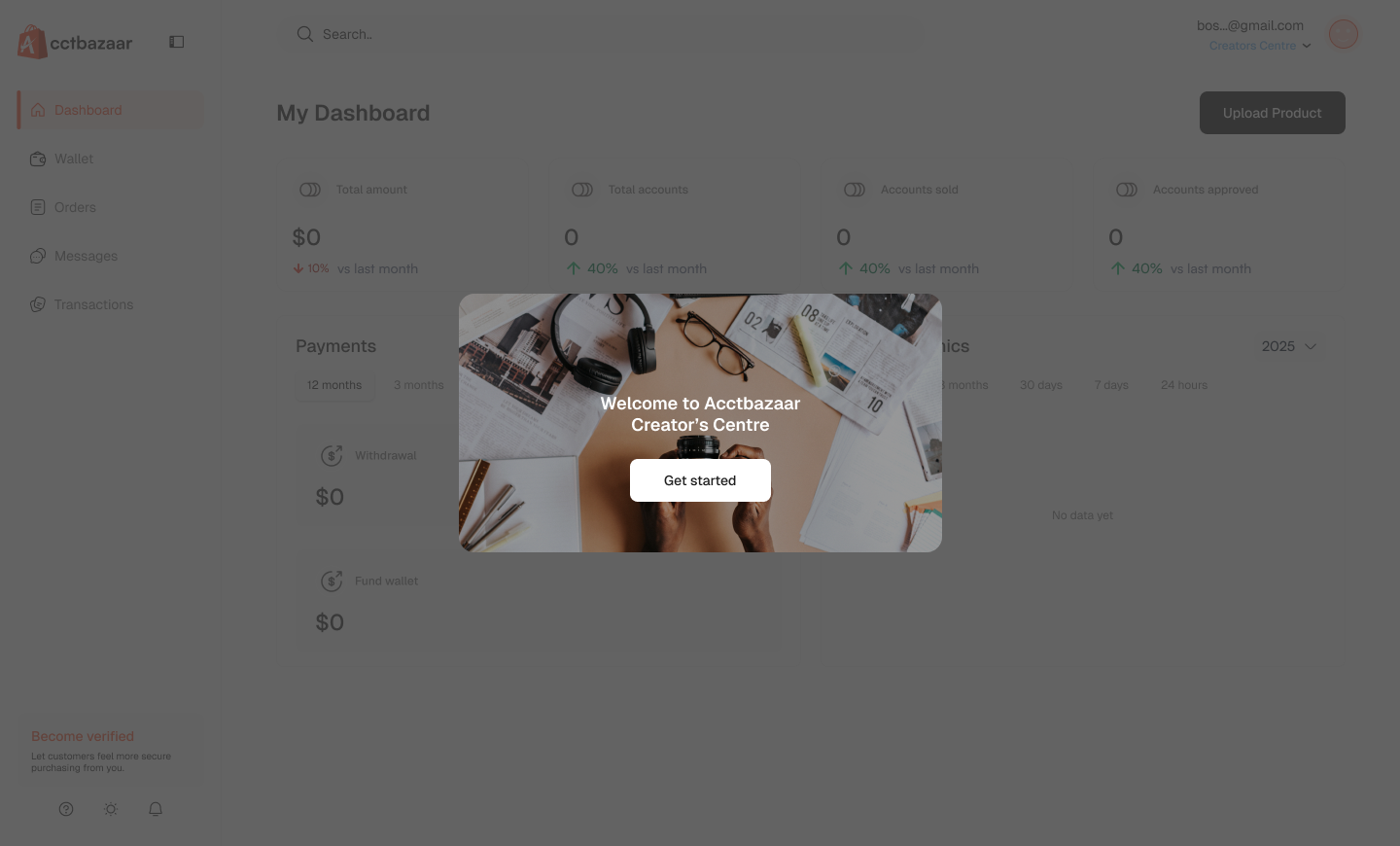
Creators get their own space with the same dashboard as merchants: total earned, products sold, payments and a sales chart. Setup starts with a short profile (photo, display name, bio), then four product types, each with its own upload flow.
Tickets
An event listing in one form
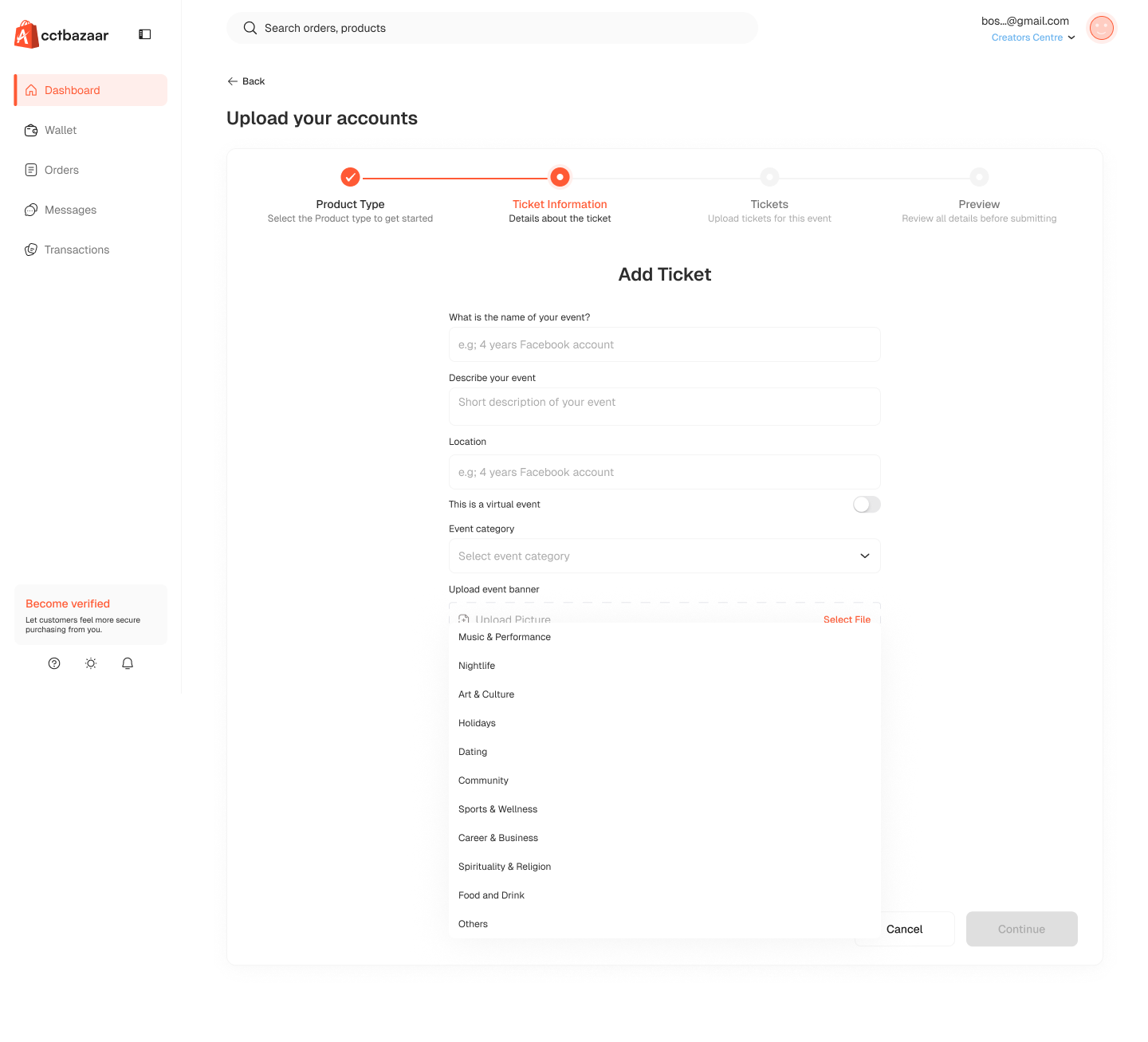
Tickets follow the same four-step pattern as merchant listings, adapted for events: name, description, location or a virtual toggle, category and banner, then ticket tiers with their own prices and quantities. Each event's detail page shows ticket types next to the buyer list, so organisers stop matching bank alerts to names.
SharedWallet · Payouts · Verification
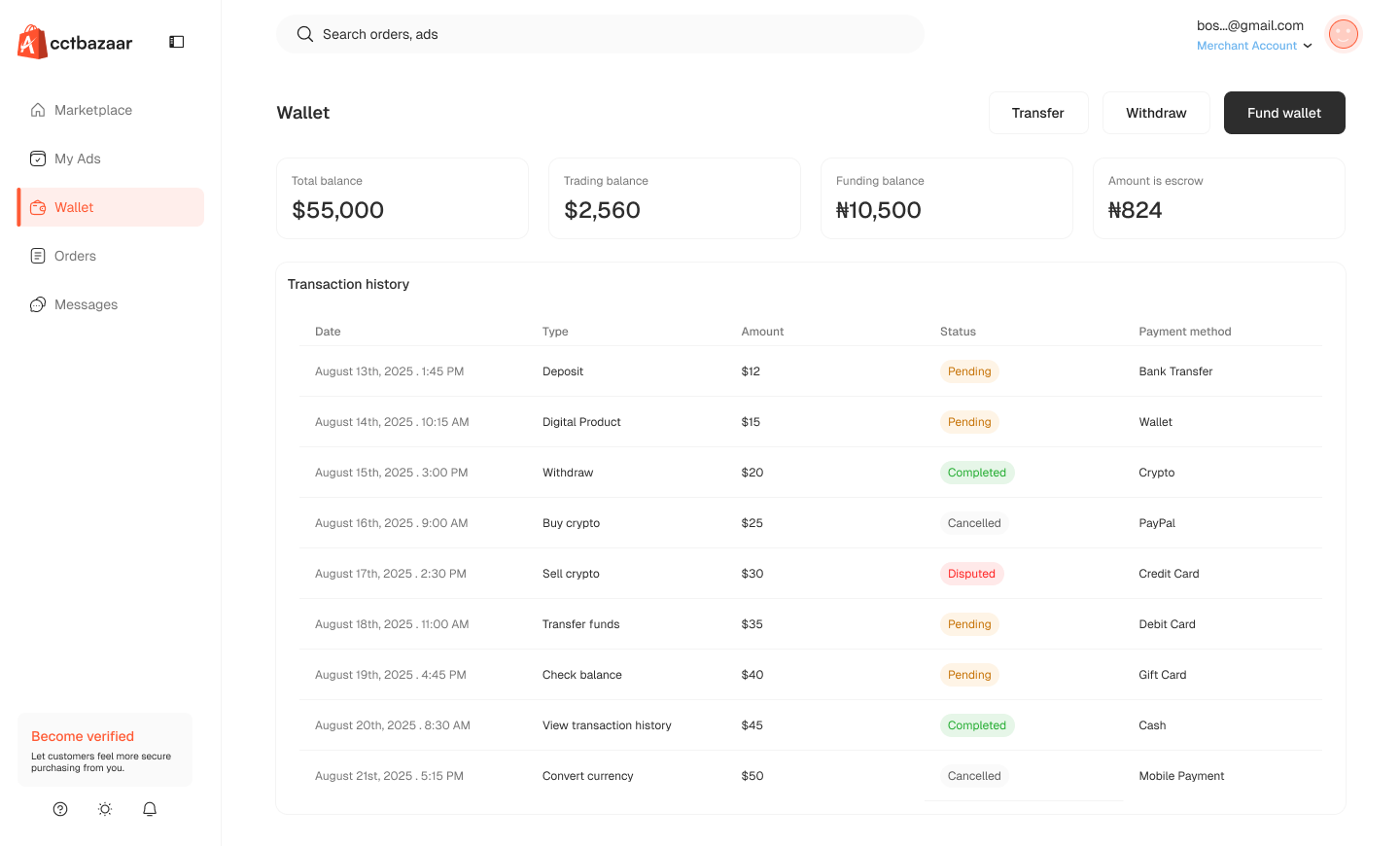
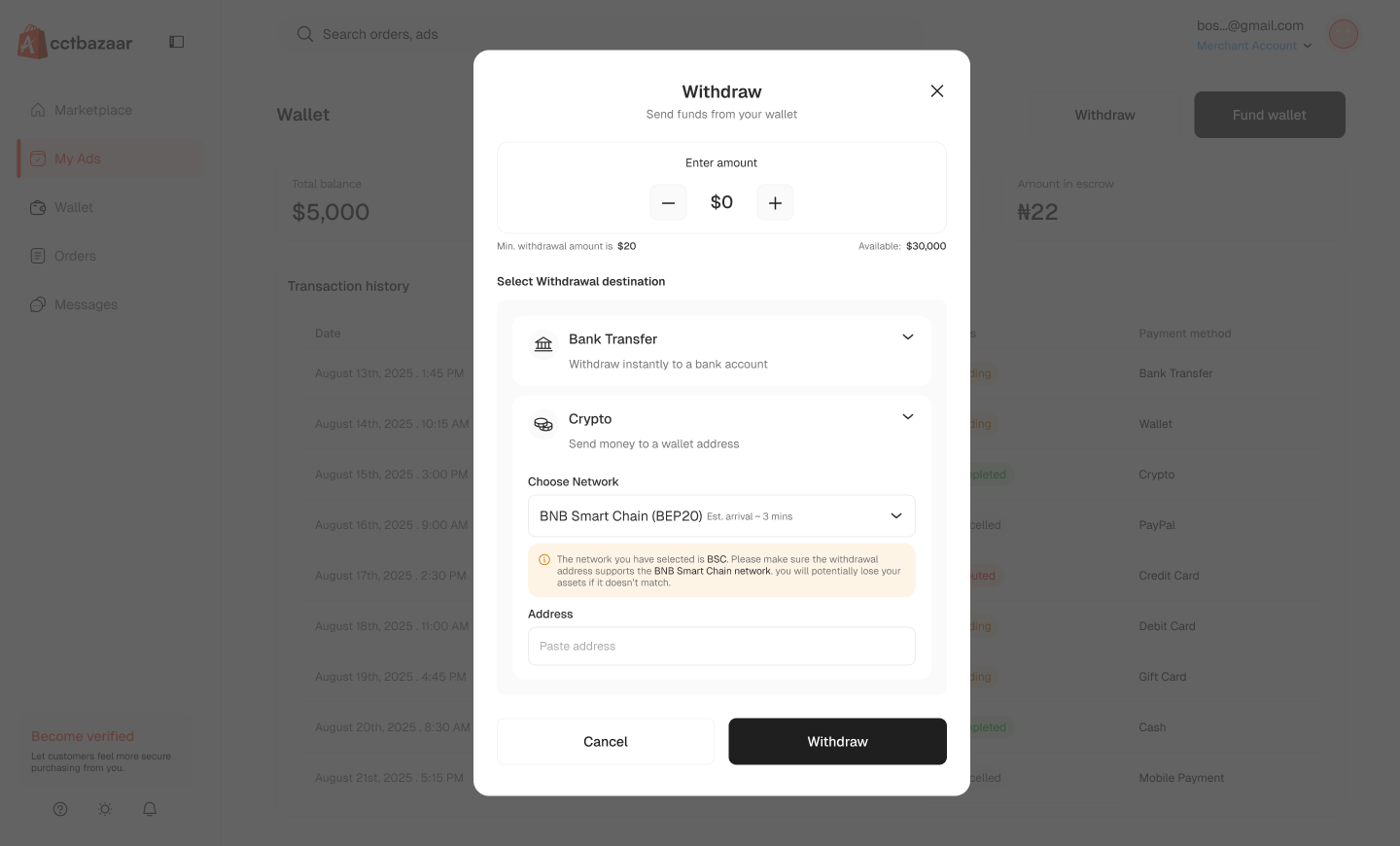
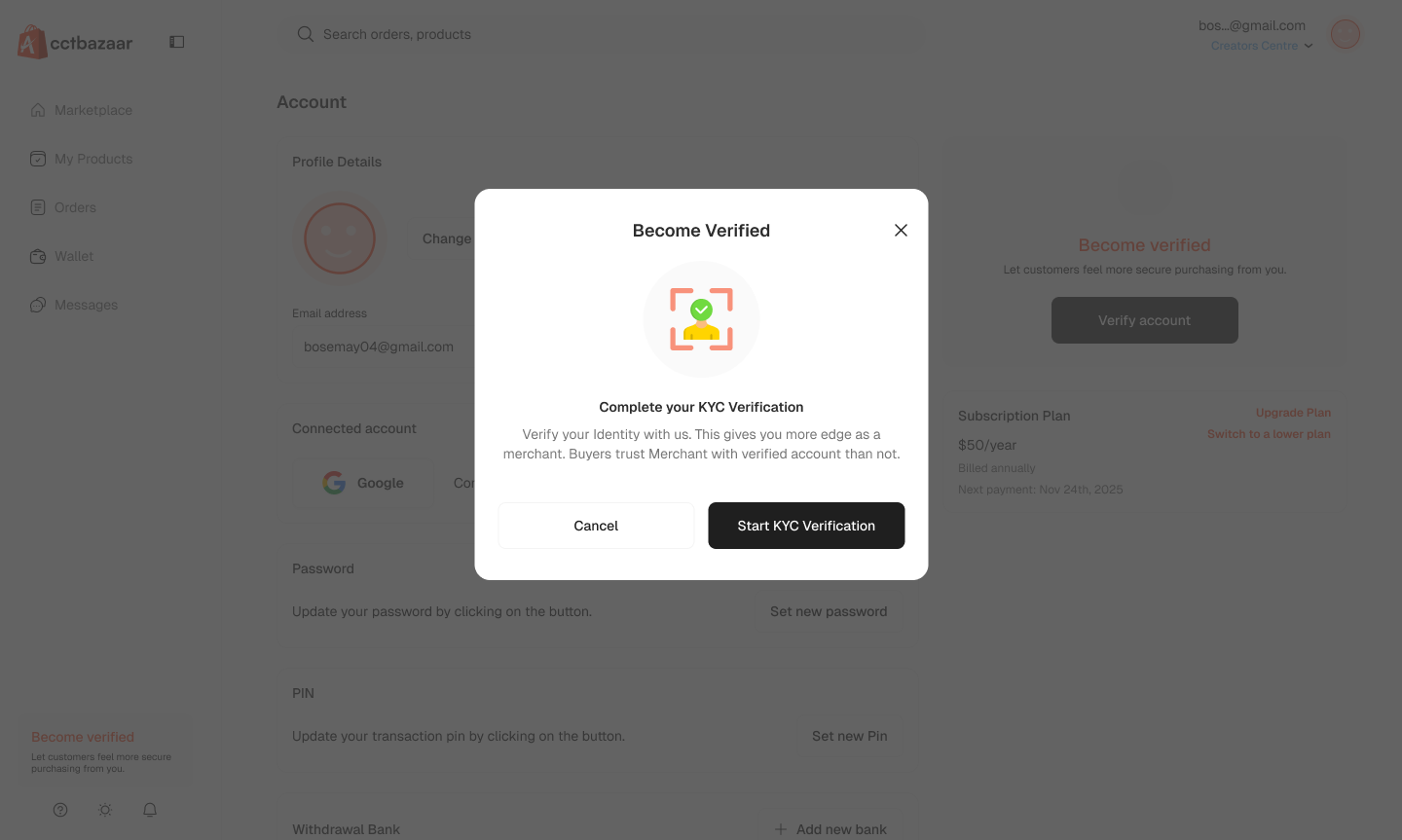
The wallet splits money into total, trading, funding and the amount held in escrow, so sellers always know what's theirs to withdraw. Withdrawals go to a bank account or a crypto address. Crypto withdrawals ask for the network first, show the estimated arrival time, and warn if the address might not match, before the PIN is entered.
Outcome and reflection
What a marketplace with a referee looks like
Before Acctbazaar, these sales happened in DMs with no escrow, no timer and no record. Putting both seller types on one set of foundations (listing, escrowed orders, chat and wallet) meant each new category was a new form, not a new product.
50k+registered users
125k+products listed
4 monthsto design the merchant and creator sides
Looking back, the creator flows reused the merchant patterns closely, which made them fast to build. Creators think in events and audiences rather than inventory, though, so the next step is creator-specific tools such as attendee check-in, course progress and discount codes. Dispute resolution is the other big opportunity: today it ends in a support conversation, and clearer evidence and outcomes on the order itself would resolve more cases without one.